Licensing momentum is real, but an outstanding IMF transparency benchmark calls for careful diligence.
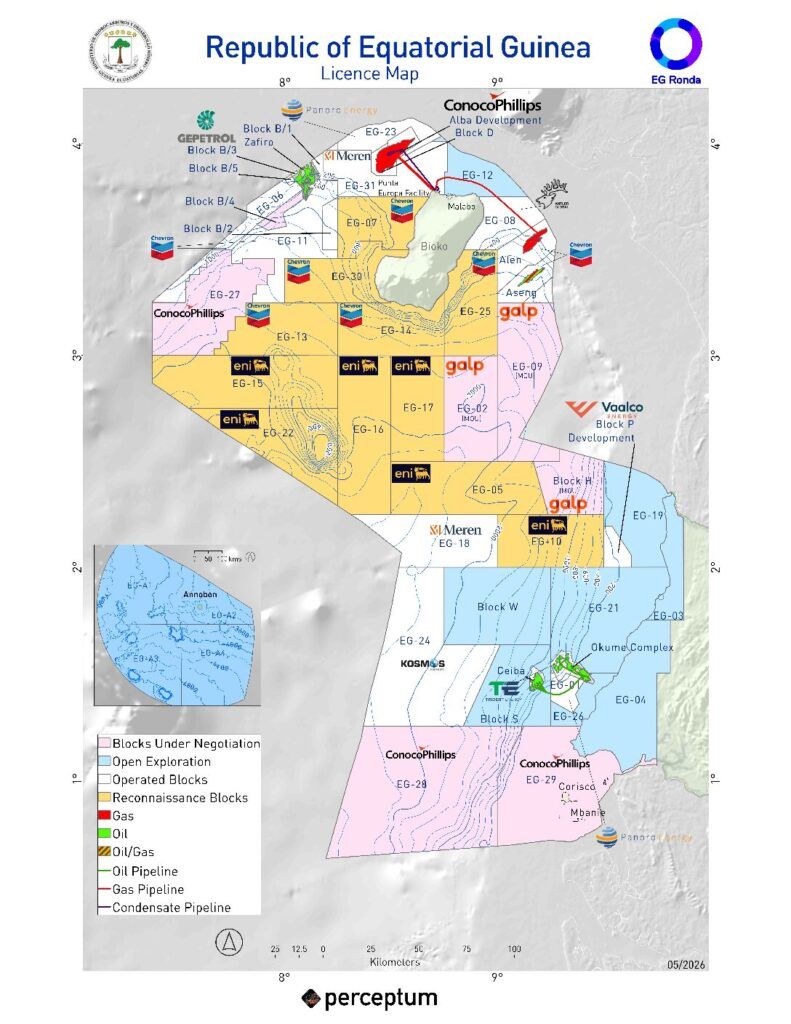
Equatorial Guinea has signed three blocks, EG-06, EG-11 and EG-23, under its ongoing EGRonda 2026 licensing round, which covers 24 blocks across offshore and onshore basins. EG-23 alone spans 600 km², with contingent resources estimated at 104 million barrels of oil and condensate plus 215 billion cubic feet of gas.
The IMF backdrop
The signings come while the country remains under an active IMF-monitored program. Two of four structural benchmarks for end-September were met. One specific, checkable condition remains outstanding: publication of a hydrocarbon sector transparency report.
What this means for clients
For companies evaluating bids into the remaining EGRonda 2026 acreage, this combination is worth weighing directly: real licensing momentum alongside a jurisdiction where contract terms, payment reliability and dispute resolution mechanisms deserve closer diligence than usual until the transparency benchmark is met.
The practical question is not whether to engage with the round, but how to structure diligence and contractual protections around the current governance environment. That means testing payment and dispute-resolution provisions early, and monitoring publication of the transparency report as a signal. Lechêne, Iñiguez & Partners can support bid-stage diligence and contract structuring.