Gabon’s latest amendments to its Tax Act introduce significant changes affecting corporate taxation, VAT, digital services, environmental levies and tax procedure. Several measures are effective now and warrant immediate attention from businesses operating in or supplying services into Gabon.
Electronic invoicing and expense deductibility
Electronic invoicing is becoming central to tax compliance: the deductibility of corporate expenses is now linked to compliant electronic invoices or other approved supporting documents. Businesses without an e-invoicing-compliant process risk having otherwise legitimate expenses disallowed.
Digital services brought into VAT
Non-resident digital businesses — covering streaming, cloud computing, software, online advertising, data services and e-learning — become liable for VAT in Gabon regardless of locally generated turnover. A simplified quarterly registration, declaration and payment regime applies to these platforms. VAT territoriality rules have also been broadened: where at least two of a set of specified indicators — billing address, tax identification number, payment information, SIM-card data, or IP geolocation — point to Gabon, an intangible service may now be treated as supplied there.
Other notable changes
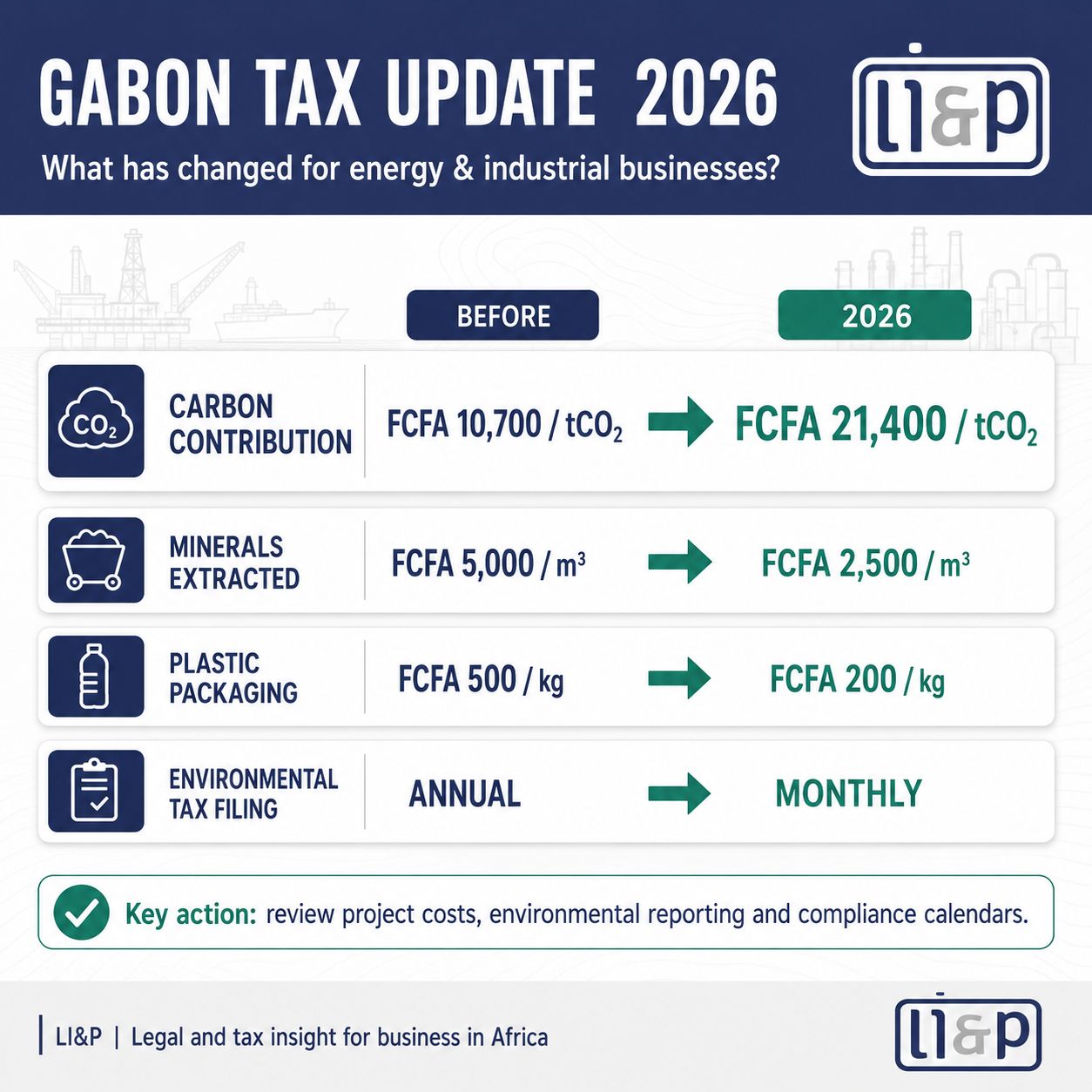
Withholding tax on taxable rental income falls from 10% to 5%, subject to an exception where the lessor is already subject to corporate income tax in Gabon. New VAT deduction thresholds apply: no deduction where the deductible proportion doesn’t exceed 10%, full deduction above 90%, and proportionate deduction in between. Environmental taxation is rising substantially — the carbon contribution on maritime and air operators increases to FCFA 21,400 per tonne of CO₂, and the Environmental Protection Tax moves from annual to monthly filing and payment. Tax administration is also becoming more digital and less forgiving of delay: electronic procedural documents are now deemed received as soon as the tax authorities send them. Separately, the OCAM Tax Convention ceased to have effect in Gabon from 1 January 2026, meaning transactions previously covered by it now fall under ordinary domestic tax law.
What this means for clients
The direction is consistent across all these measures: broader taxation of the digital economy, stricter electronic compliance requirements, and higher environmental taxation. Businesses operating in or supplying services into Gabon — particularly non-resident digital providers newly brought into VAT scope — should review invoicing systems, VAT position, contractual arrangements and compliance calendars now, rather than waiting for a filing cycle to expose a gap.